 Cykeo RFID IoT Solution Products R&D Manufacturer
Why Do Retailers Prefer Handheld RFID Readers Over Fixed Systems?
1320Discover why handheld RFID readers dominate retail—mobility, flexibility, and cost savings. Learn how Cykeo’s solutions enhance inventory accuracy and customer experience.
MoreAll RFID Product
An rfid tag printer simultaneously prints and encodes UHF RFID labels, ensuring fast, accurate data writing and visible labeling for scalable asset tracking and inventory management.
That’s the short answer. In practice, the difference between a standard label printer and a true RFID tag printer becomes obvious the moment you try to run high-volume operations.
In Cykeo deployments, an rfid tag printer sits right at the beginning of the data chain. It’s not just printing labels—it’s assigning identity.
This “print + encode + verify” loop eliminates one of the most common failure points in RFID systems: bad data at the source.
According to GS1 and RAIN RFID Alliance:
From our own field tests using Cykeo-compatible encoding workflows:
Skipping a proper rfid tag printer often leads to subtle but expensive problems.
| Capability | Standard Printer | RFID Tag Printer |
|---|---|---|
| Visual printing | Yes | Yes |
| RFID encoding | No | Yes |
| Data verification | No | Yes |
| UHF compatibility | No | Yes |
| Automation level | Low | High |
It’s not just a hardware upgrade—it’s a data integrity upgrade.
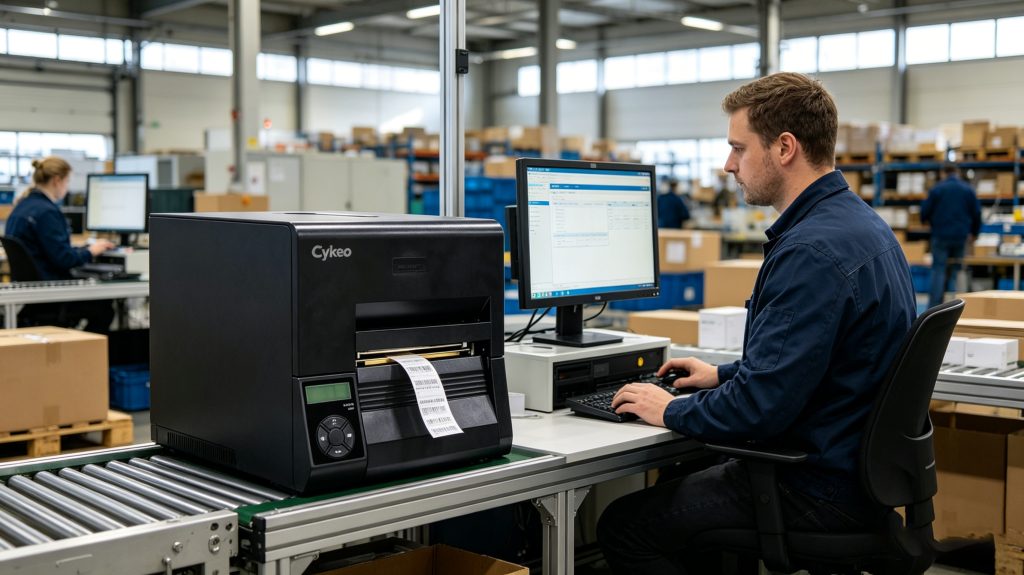
In one logistics warehouse project, the client initially used pre-encoded tags from multiple suppliers. Sounds efficient—until it wasn’t.
Within two weeks:
We introduced an rfid tag printer into their workflow.
After deployment:
The shift wasn’t dramatic—it was quiet. Which, in operations, usually means it’s working.
Cykeo focuses on combining precision encoding with scalable UHF reading.
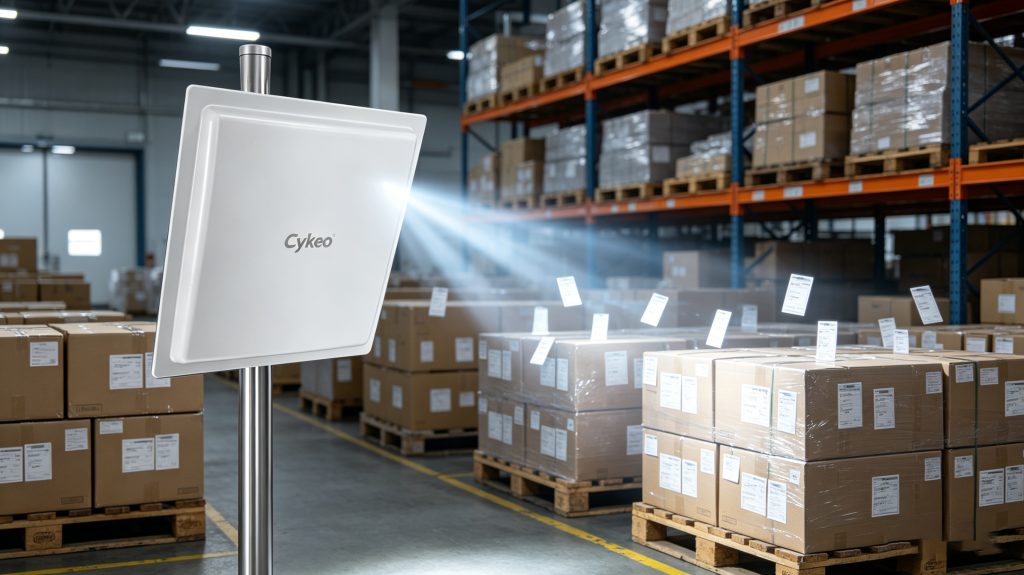
An rfid tag printer combines both functions—printing visible labels and encoding RFID chips—while standalone encoders only write data.
Yes. Most industrial rfid tag printers support UHF EPC Gen2 standards, enabling long-range identification.
Absolutely. Without verification, encoding errors can go unnoticed and propagate through the system.
rfid tag printer is one of those devices you don’t think about—until something goes wrong.
In every project we’ve handled, the systems that ran smoothly had one thing in common: clean, verified data from the very first printed tag.
Get that right, and everything downstream—UHF reading, tracking, reporting—just works.
Discover why handheld RFID readers dominate retail—mobility, flexibility, and cost savings. Learn how Cykeo’s solutions enhance inventory accuracy and customer experience.
More
Learn how to read an RFID tag using professional tools. Discover accurate methods, real-world insights, and high-performance RFID reading techniques.
More
Discover how 13.56 MHz RFID enables secure document management, intelligent archive cabinets, and contactless identification. Learn expert deployment insights, ISO 15693 compatibility, and why Cykeo HF RFID solutions improve file tracking efficiency.
More
RFID tags UHF deliver long-range identification, fast bulk reading, and reliable asset tracking for logistics, retail, and industrial applications with Cykeo.
More