 Cykeo RFID IoT Solution Products R&D Manufacturer
RFID Tester Market Size and Market Share Forecast (2025-2035)
140RFID tester market forecast from 2025 to 2035, covering market size, CAGR, applications, frequency bands, regional growth, and competitive landscape.
MoreAll RFID Product
Based on RFID systems, Wi-Fi-based RTLS, Bluetooth Low Energy (BLE), ultrasound and infrared, ZigBee, GPS, etc. – Global Industry Outlook, by Application, by End User, Key Companies (GE Healthcare, Zebra Technologies Corporation, Stanley Healthcare, etc.).
I. Market Overview
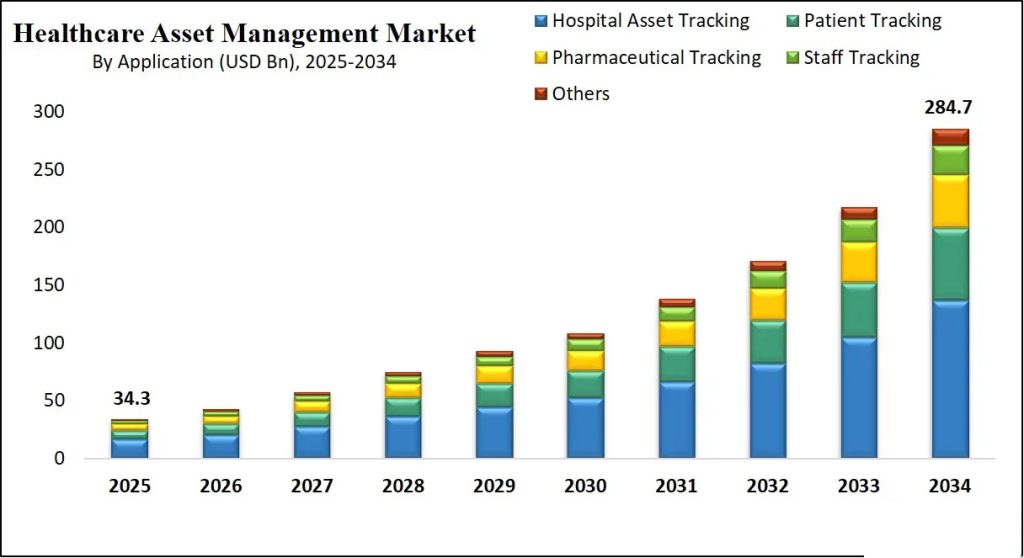
The global healthcare asset management market is projected to reach $34.3 billion in 2025 and is expected to grow significantly to $284.7 billion by 2034, representing a CAGR of 26.5%. This growth is driven by increasing demand for Real-Time Location Systems (RTLS), RFID-enabled tracking solutions, and efficient medical equipment management in hospitals and healthcare institutions.
Healthcare asset management refers to a systematic approach by which healthcare institutions monitor, track, and manage physical assets such as medical equipment, surgical instruments, hospital beds, and staff resources throughout their entire lifecycle. This involves integrating advanced technologies such as RFID, Real-Time Location Systems, IoT sensors, and barcode systems to ensure optimal utilization, security, and availability of these assets.
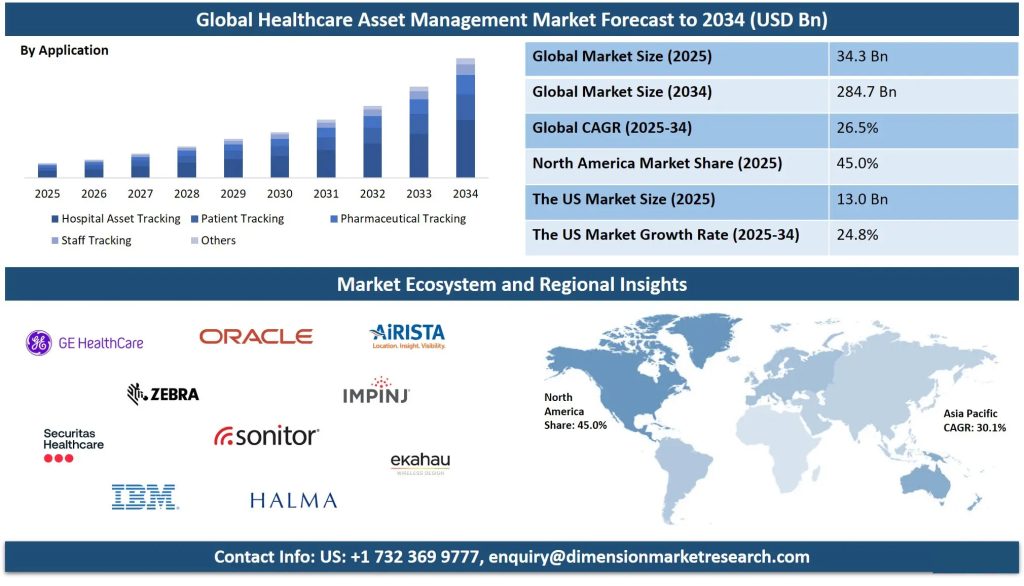
The goal is to reduce operational inefficiencies, minimize equipment downtime, prevent equipment loss or theft, and improve overall patient care quality. As healthcare institutions face increasing pressure to streamline operations, reduce costs, and improve patient outcomes, effective asset tracking and inventory management have become a crucial component of modern healthcare systems.
The global healthcare asset management market is experiencing rapid growth due to increasing demand for real-time tracking solutions, rising cases of equipment loss, and the proliferation of digital health infrastructure.
Hospitals, clinics, and pharmaceutical companies are increasingly deploying RFID-based solutions, wireless tracking technologies, and software platforms to optimize asset use and ensure compliance. This transformation is also driven by the rise of smart hospitals, where automated systems enhance the visibility and control of critical assets in real time, significantly improving operational efficiency and patient safety.
Furthermore, the market is being driven by surging healthcare spending, a growing focus on reducing capital expenditures through better resource management, and the increasing prevalence of cloud-based asset tracking platforms.
In developing regions, particularly Asia Pacific and Latin America, the market is experiencing accelerated adoption due to the rapid development of healthcare infrastructure and government investment in digital health technologies. As healthcare systems become increasingly complex, the demand for comprehensive asset lifecycle management platforms will continue to grow, driving ongoing demand from both the public and private healthcare sectors.
1.The US Healthcare Asset Management Market
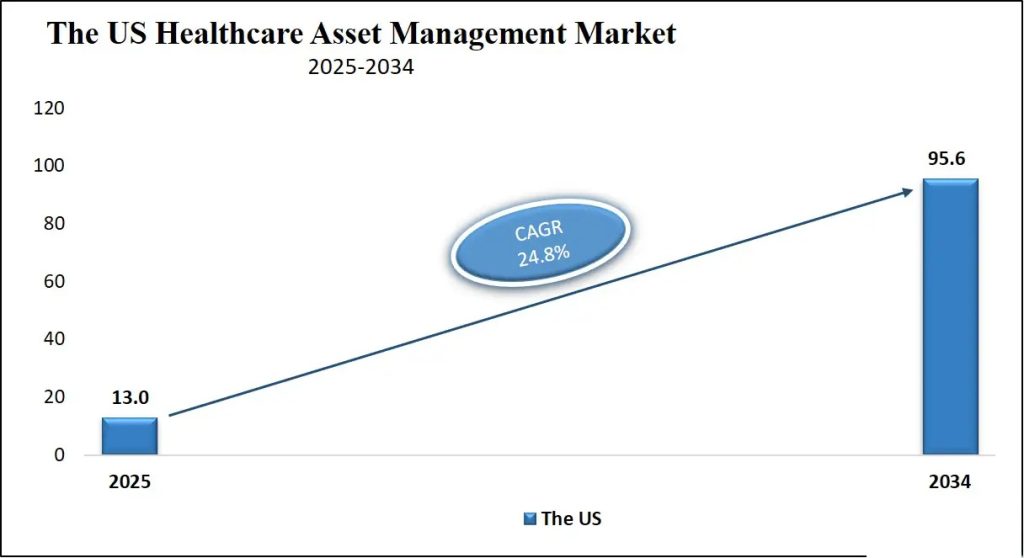
The US healthcare asset management market is projected to reach $13 billion by 2025. It is expected to continue growing over the foreseeable future, reaching $95.6 billion by 2034, representing a CAGR of 24.8%.
The US healthcare asset management market is one of the most mature and technologically advanced segments globally, driven by the growing need to optimize hospital workflows, reduce equipment loss, and improve patient safety. The widespread adoption of RFID systems, Real-Time Location Services (RTLS), and inventory control software in healthcare environments is revolutionizing real-time asset visibility and utilization.
Hospitals and large healthcare networks in the US are heavily investing in asset tracking platforms to manage high-value medical equipment, monitor patient flow, and streamline supply chain operations. These technologies not only minimize operational inefficiencies but also support regulatory compliance, improve resource allocation, and enable predictive maintenance strategies.
Furthermore, the US market benefits from strong federal government initiatives promoting digital health transformation and the integration of Internet of Things (IoT) technologies into clinical settings. The rise of smart hospitals, coupled with the increasing demand for centralized asset storage and electronic health record (EHR) integration, is driving demand for intelligent healthcare asset management solutions. Key players are focusing on cloud-based tracking systems, AI-driven analytics, and automated tools that enable scalable and data-driven decision-making. The U.S. continues to lead innovation and adoption in healthcare asset monitoring due to a high concentration of top hospitals, healthcare providers, and pharmaceutical companies.
2、European healthcare asset management market
The European healthcare asset management market is projected to reach approximately $7.5 billion by 2025. This growth reflects the region’s strong emphasis on healthcare digitalization, patient safety, and efficient resource utilization. European healthcare providers are increasingly adopting RFID-based tracking systems and Real-Time Location Solutions (RTLS) to streamline equipment management, reduce loss or theft, and improve operational efficiency.
Countries such as Germany, France, and the UK are leading the way in deploying these technologies, driven by stringent regulatory frameworks, growing demand for high-quality healthcare, and pressure on hospital cost control.
The market is projected to grow at a CAGR of 22.8% by 2034. Europe is experiencing sustained growth in this sector. This expansion is driven by increased investment in smart hospital infrastructure, the growing demand for more personalized care from an aging population, and the integration of artificial intelligence and the Internet of Things (IoT) into hospital operations.
Furthermore, public and private healthcare institutions are increasingly committed to automating inventory and asset workflows to improve patient outcomes and reduce manual inefficiencies. The region’s mature healthcare ecosystem, coupled with favorable government policies and funding schemes, continues to create fertile ground for scalable and innovative asset management solutions across Europe.
3、Japanese healthcare asset management market
The Japanese healthcare asset management market is projected to reach $1.5 billion by 2025. This growth is driven by Japan’s advanced healthcare infrastructure, widespread adoption of automation technologies, and a strong emphasis on operational efficiency by hospitals and elderly care facilities.
Japanese healthcare institutions are increasingly turning to RFID and RTLS systems to manage high-value medical equipment, streamline inventory management, and improve patient care processes. The country’s rapidly aging population is placing significant pressure on healthcare resources, prompting hospitals to adopt smart asset tracking solutions to optimize utilization and reduce unnecessary expenses.
The market is projected to grow at a CAGR of 19.5% from 2025 to 2034. The Japanese healthcare asset management market is expected to grow steadily, driven by both technological innovation and demographic needs. Government commitments to the development of smart hospitals and the digitalization of healthcare services are further accelerating the demand for solutions in real-time tracking, predictive maintenance, and automated workflows.
Japanese manufacturers and technology companies are also playing a key role in shaping the local ecosystem by developing comprehensive asset management platforms tailored to the unique needs of the Japanese healthcare industry. The market for urban and regional healthcare institutions will see significant growth as hospitals continue to modernize and implement IoT solutions.
II. Global Healthcare Asset Management Market: Key Points
III. Global Healthcare Asset Management Market: Application Scenarios
IV. The Impact of Artificial Intelligence on the Healthcare Asset Management Market
Artificial intelligence (AI) is significantly reshaping the healthcare asset management market by introducing intelligent automation, predictive analytics, and data-driven decision-making in asset tracking, utilization, and maintenance. Traditional systems primarily focus on equipment location or inventory tracking, but with the integration of AI, healthcare organizations can now proactively manage assets more accurately and proactively.
AI algorithms analyze massive datasets from RFID tags, IoT sensors, and RTLS systems to predict asset demand, detect anomalies, and recommend optimal usage patterns. This leads to improved equipment availability, reduced operating costs, and improved patient care outcomes.
AI also enables predictive maintenance by continuously monitoring asset performance data to anticipate potential failures. For example, machine learning models can assess the lifespan, environmental conditions, and historical performance of medical equipment to predict maintenance plans, thereby avoiding unexpected downtime and costly repairs.
Furthermore, AI-driven dashboards help hospital managers identify inefficiencies, optimize staff deployment, and streamline supply chain logistics. In high-traffic environments such as emergency rooms or surgical wards, AI ensures that critical assets are always accessible when needed.
As global healthcare systems drive digital transformation, the integration of artificial intelligence into asset management is expected to become a key competitive differentiator, driving real-time insights, operational excellence, and patient-centered care.
V. Global Healthcare Asset Management Market: Statistics and Facts
Centers for Medicare & Medicaid Services (CMS)
American Medical Association (AMA)
KFF (Kaiser Family Foundation)
US National Healthcare Expenditure Projections
The UK’s National Health Service (NHS)
European Commission/Digital Decade Indicators
VI. Global Healthcare Asset Management Market: Market Dynamics
1、Global Healthcare Asset Management Market: Driving Factors
(1)The growing demand for real-time asset visualization in hospitals
The increasing complexity of hospital operations has led to a surge in demand for Real-Time Location Systems (RTLS) and RFID-based tracking solutions. Hospitals face ongoing challenges in managing large numbers of high-value medical devices, mobile devices, and patient care assets. By implementing intelligent asset tracking systems, healthcare organizations can more efficiently locate, allocate, and manage resources, reduce device search times, and improve overall clinical productivity. This need for real-time visibility is one of the most powerful drivers of asset digitization in modern healthcare systems.
(2)Increasing focus on cost control and operational efficiency
With rising healthcare spending and shrinking profit margins, hospitals and healthcare systems face pressure to reduce unnecessary capital expenditures and eliminate asset redundancy. Asset management platforms leveraging IoT sensors and data analytics enable service providers to monitor asset utilization, avoid over-purchasing, and schedule preventative maintenance. This optimization reduces total cost of ownership (TCO) and improves return on investment (ROI), making healthcare asset management a strategic tool for achieving financial sustainability.
2、Global Healthcare Asset Management Market: Restrictions
(1)High implementation costs and complex integration
While beneficial in the long run, the initial costs of deploying a healthcare asset management solution can be a major obstacle for small and medium-sized healthcare providers. The expenses associated with RFID tagging, RTLS infrastructure, software licensing, and IT integration can be substantial. Furthermore, integrating an asset tracking platform with existing hospital information systems (HIS), electronic health records (EHRs), and inventory systems may require significant customization and technical expertise, slowing adoption in resource-constrained environments.
(2)Data security and compliance issues
Healthcare asset tracking involves collecting and storing sensitive information, including equipment usage, patient movement, and staff location data. This raises serious concerns about data privacy and compliance, especially under standards such as HIPAA, GDPR, and local healthcare regulations. Without robust cybersecurity protocols and access control systems, healthcare institutions face the risk of potential legal penalties and reputational damage.
3、Global Healthcare Asset Management Market: Opportunities
(1)Expansion of Smart Hospital Projects in Emerging Markets
Countries in the Asia-Pacific region, Latin America, and the Middle East are investing heavily in modernizing their healthcare infrastructure. These smart hospital initiatives are creating fertile ground for the application of intelligent asset tracking, predictive analytics, and cloud-based inventory management systems. As the digital health ecosystem matures, asset management platforms are poised to become central to hospital automation and patient safety strategies, unlocking new market growth opportunities.
(2)AI-driven growth in predictive maintenance demand
The integration of artificial intelligence (AI) into asset management systems is opening up new possibilities for predictive maintenance and real-time performance monitoring. Machine learning algorithms can analyze asset usage data, predict equipment failures, optimize maintenance plans, and reduce unexpected downtime. Healthcare facilities can extend equipment lifespan and increase uptime, especially in mission-critical departments such as ICU, surgery, and emergency care.
4、Global Healthcare Asset Management Market: Trends
(1)Transition to cloud asset management platform
In healthcare networks, asset tracking solutions are clearly shifting from on-premises deployments to cloud-based solutions. Cloud platforms, with their scalability, remote access, automatic updates, and reduced IT overhead, are ideally suited for multi-institutional hospital systems. This trend also supports centralized inventory monitoring and facilitates logistics related to telemedicine by enabling real-time asset coordination across locations.
(2)Integration with electronic health records (EHR) and workflow automation
An emerging trend is the integration of asset management systems with electronic health record platforms and hospital workflow tools. This enables intelligent automation, such as triggering alarms when equipment enters a patient’s room, directly recording equipment usage in the patient’s file, or notifying the maintenance team based on usage thresholds. These integrations improve clinical accuracy, increase staff productivity, and support more rational resource allocation throughout the patient care continuum.
VII. Global Healthcare Asset Management Market: Scope and Analysis
1、Analysis by Product Type
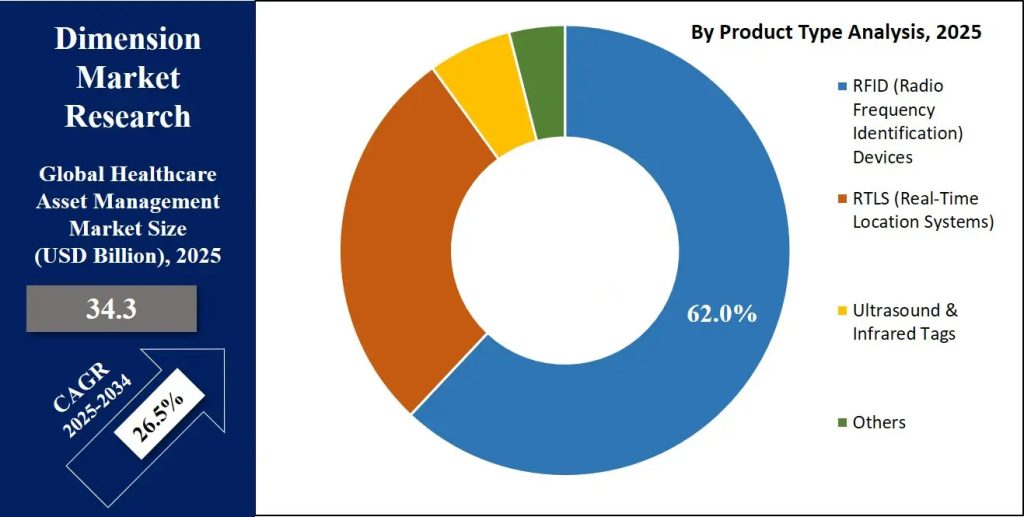
In the healthcare asset management market, RFID (Radio Frequency Identification) devices are projected to dominate the product category segment, accounting for approximately 62.0% of the market share by 2025. This dominance is driven by the widespread adoption of RFID technology in hospital, clinic, and pharmaceutical environments for real-time asset tracking, equipment tagging, and inventory management.
RFID systems offer an economical and scalable solution for tracking high-value healthcare assets, reducing equipment loss, automating workflows, and improving overall operational efficiency. Their ability to operate without direct line of sight and integrate with hospital management systems makes them particularly important in fast-paced healthcare environments, especially where time and resource optimization are critical.
Real-time Location Systems (RTLS) also play a vital role in healthcare asset management. As a more advanced tracking technology, RTLS enables continuous, real-time monitoring of the specific location of assets, patients, and personnel within healthcare facilities. Combining Wi-Fi, Bluetooth Low Energy (BLE), infrared, or ultrasound technologies, RTLS provides high-precision tracking across hospital areas.
This allows healthcare providers to improve response times, reduce patient wait times, and increase staff productivity by eliminating manual tracking processes. RTLS is particularly important in emergency departments, intensive care units, and operating rooms because rapid access to necessary equipment and real-time coordination between nursing teams are crucial. While RTLS is more complex and costly than RFID, it is gaining popularity in large-scale smart hospital projects aimed at achieving full digitalization and workflow automation.
2、Technical Analysis
RFID-based systems are projected to solidify their leadership in the healthcare asset management technology market, capturing approximately 62.0% market share by 2025. These systems are widely adopted due to their affordability, scalability, and ease of integration into existing hospital infrastructure. RFID technology enables healthcare providers to automate asset identification, monitor inventory levels, and track the movement of equipment and supplies without direct human intervention.
The ability to read multiple tags simultaneously and without line of sight significantly improves efficiency in high-traffic healthcare environments. Hospitals and clinics rely on RFID systems to reduce equipment loss, prevent theft, and maintain real-time visibility of critical assets, contributing to better operational control and reduced operating costs.
Wi-Fi-based Real-Time Location Systems (RTLS) are becoming a valuable complement to this technology. These systems utilize the facility’s existing Wi-Fi network to track and locate tagged assets, staff, and even patients in real time. Wi-Fi RTLS is particularly advantageous in large hospitals and multi-institutional healthcare networks, where establishing entirely new tracking infrastructure can be prohibitively expensive.
It enables precise location tracking, supports workflow automation, and improves response times in critical departments such as emergency rooms and operating rooms. While Wi-Fi RTLS may have limitations compared to other RTLS technologies such as ultrasound or infrared in terms of signal interference and positioning accuracy, its compatibility with existing IT infrastructure makes it an ideal choice for healthcare providers who want to modernize asset management without significant capital investment.
3、Analysis by Application
Hospital asset tracking is projected to lead the healthcare asset management market segment, accounting for approximately 48.0% of the total market capitalization by 2025. This dominance stems from hospitals’ urgent need to efficiently manage a wide range of physical assets, including surgical instruments, diagnostic equipment, wheelchairs, intravenous pumps, and mobile workstations.
By using technologies such as RFID tags and real-time location systems, hospitals can monitor the movement and availability of these assets in real time, reducing equipment loss, preventing damage, and improving resource utilization.
Rapidly locating critical medical equipment not only saves valuable staff time but also improves patient care quality by ensuring timely access to critical tools. In high-pressure environments such as emergency rooms and intensive care units, asset tracking is crucial for maintaining operational continuity and reducing treatment delivery delays.
Patient tracking is another important application in this market, providing healthcare providers with the ability to monitor patients’ location and status in real time throughout the entire care process.
Through wearable RFID wristbands or Bluetooth tags, hospitals can track patients from admission to discharge, helping to optimize ward allocation, reduce wait times, and prevent unauthorized departures or escapes, especially in high-risk areas such as behavioral health wards or neonatal care. Patient tracking also supports infection control efforts by recording patient interactions and movement paths, which is crucial during disease outbreaks. Furthermore, it facilitates seamless coordination between departments, reduces transfer delays, and improves overall care efficiency. With increasing priorities for patient safety and personalized care, the adoption of smart tracking solutions is expected to rise steadily.
4、Analysis by end user
Hospitals and clinics are projected to dominate the end-user segment of the healthcare asset management market, accounting for nearly 66.0% of the total market share by 2025. This strong position is attributed to the sheer volume and diversity of assets managed in hospital environments, including medical devices, surgical instruments, hospital beds, and mobile diagnostic tools.
Healthcare providers face increasing pressure to improve operational efficiency, reduce equipment downtime, and enhance patient care outcomes, driving the adoption of RFID and RTLS-based asset tracking systems. These technologies enable real-time visibility into assets, avoiding unnecessary procurement, reducing capital expenditures, and streamlining maintenance processes.
Furthermore, hospitals benefit from greater compliance, better inventory control, and improved allocation of clinical resources, particularly in high-risk departments such as intensive care units, operating rooms, and emergency rooms.
Pharmaceutical companies are also a growing end-user group in the healthcare asset management market. These organizations rely on advanced asset tracking solutions to monitor and manage valuable resources in R&D laboratories, manufacturing plants, and distribution centers. Asset management systems are used to track laboratory equipment, monitor temperature-sensitive pharmaceutical inventory, and ensure the chain of custody for high-value medications.
Adhering to stringent regulatory frameworks such as the FDA and EMA, it is essential to accurately record and track raw materials and finished products in real time. RFID and IoT sensors also support cold chain monitoring for biologics and vaccines, helping to maintain product integrity from production to delivery. As the scale and complexity of the pharmaceutical business increase, the demand for intelligent asset management solutions that ensure safety, traceability, and efficiency is expected to accelerate.
VIII. The Healthcare Asset Management Market Report is segmented based on the following:
Classified by product type
Classified by technology
Classified by application
Classified by end user
IX. Global Healthcare Asset Management Market: Regional Analysis
1、The region with the largest share of income
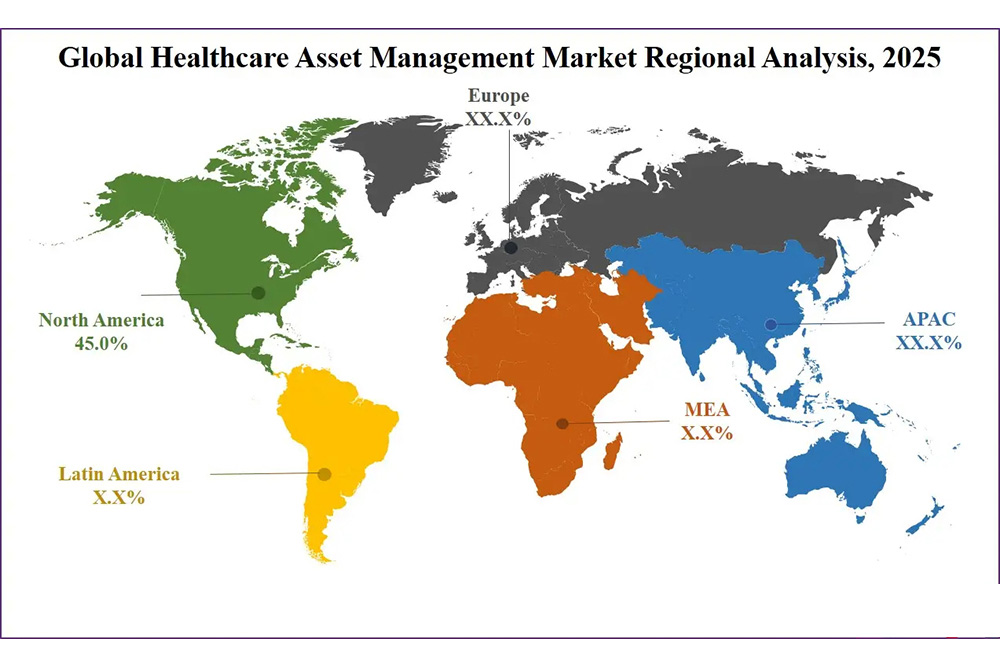
North America is projected to dominate the global healthcare asset management market by 2025, accounting for approximately 45.0% of total market revenue. This leadership is attributed to the region’s advanced healthcare infrastructure, widespread adoption of RFID and real-time location systems, and a robust regulatory framework supporting the digital transformation of healthcare.
Hospitals and healthcare systems in the United States and Canada are early adopters of asset tracking technologies aimed at improving operational efficiency, reducing equipment loss, and enhancing patient care. Furthermore, the presence of leading technology vendors, substantial healthcare spending, and continued investment in smart hospital projects further solidify North America’s position as a major contributor to global market growth.
2、Regions with significant growth
The Asia-Pacific region is projected to see the most significant growth in the healthcare asset management market in the coming years, driven by rapid development of healthcare infrastructure, increased investment in smart hospital projects, and growing demand for advanced medical technologies in emerging economies such as China, India, and Southeast Asia.
Governments in the region are prioritizing healthcare modernization, leading to increased adoption of RFID, IoT-based asset tracking, and real-time location systems in both public and private healthcare institutions.
Furthermore, a growing middle class, rising healthcare spending, and the expansion of private hospital chains are creating favorable conditions for the widespread deployment of asset management solutions. With the increasing availability of cost-effective technologies, the Asia-Pacific region is poised to become a major growth engine for the global market.
3、By region
North America
Europe
Asia-Pacific region
Latin America
Middle East and Africa
4、Global Healthcare Asset Management Market: Competitive Landscape
The global competitive landscape of the healthcare asset management market is characterized by a number of established companies and a growing number of innovative startups vying for market share through technological advancements and strategic partnerships.
Key companies such as GE HealthCare, Zebra Technologies, IBM, Oracle, CenTrak, and Stanley Healthcare are leading the market with comprehensive RFID and RTLS-based solutions tailored for hospitals, pharmaceutical companies, and laboratories.
These companies are focused on integrating artificial intelligence, cloud computing, and the Internet of Things into their platforms to enhance real-time tracking, predictive maintenance, and workflow automation. Meanwhile, emerging vendors are offering specialized and cost-effective solutions to meet the needs of small and medium-sized healthcare providers.
Mergers and acquisitions and regional expansion are also shaping the competitive landscape as companies seek to strengthen their global presence to meet the growing demand for smart asset tracking technologies in diverse healthcare environments.
5、Some of the key players in the global healthcare asset management market include:
RFID tester market forecast from 2025 to 2035, covering market size, CAGR, applications, frequency bands, regional growth, and competitive landscape.
More
The RFID signage system market is projected to grow rapidly from 2025 to 2035. This report analyzes market size, CAGR, key segments, regional trends, and drivers.
More
RFID-integrated smart packaging market forecast from 2025 to 2035, covering market size, CAGR, technology trends, applications, and regional growth insights.
More
An in-depth analysis of the global RFID market from 2024 to 2031, covering technology evolution, market structure, passive vs active RFID, and real-world adoption trends.
More