 Cykeo RFID IoT Solution Products R&D Manufacturer
RFID Market Notes and Industry Observations (2024–2031)
169An in-depth analysis of the global RFID market from 2024 to 2031, covering technology evolution, market structure, passive vs active RFID, and real-world adoption trends.
MoreAll RFID Product
The RFID Kanban system market was valued at $2.6 billion in 2025 and is projected to reach $13.9 billion by 2035, representing a CAGR of 18.1%. Single-box RFID Kanban systems held a 57.9% share in 2025, driven by the adoption of simplified, low-maintenance inventory triggering mechanisms across industries, reducing stockouts and supporting continuous replenishment processes. RFID box components led with a 43.6% share due to their central role in automated identification, real-time tracking, and seamless replenishment signaling in supply chain and hospital inventory environments.
This growth is fueled by pressures on manufacturers and healthcare institutions to eliminate human error, shorten replenishment cycles, and maintain tighter inventory visibility. The surge in e-commerce logistics, rising costs of expired medical supplies, and the need for precise material movement tracking have reinforced the adoption of RFID-based Kanban models. Despite ongoing challenges such as cybersecurity, infrastructure downtime, and operational rigidities, continued investment by global automation companies is improving system accuracy, replenishment speed, and integration efficiency across warehouses, medical warehouses, and automotive production lines.
I. Rapid Market Statistics for RFID Signage Systems
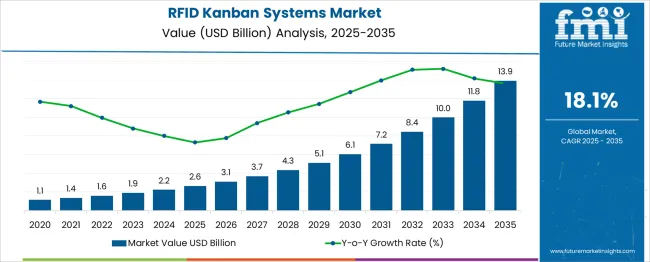
| Measurement | Value |
|---|---|
| Estimated Market Value of RFID Signage Systems (2025 Edition) | US$2.6 billion |
| Forecasted Market Value of RFID Signage Systems (2035 F) | US$13.9 billion |
| CAGR Forecast (2025-2035) | 18.1% |
II. Reasons for the Growth of RFID Signage System Market Segmentation
1、Insights into the niche market of single-box RFID signage systems
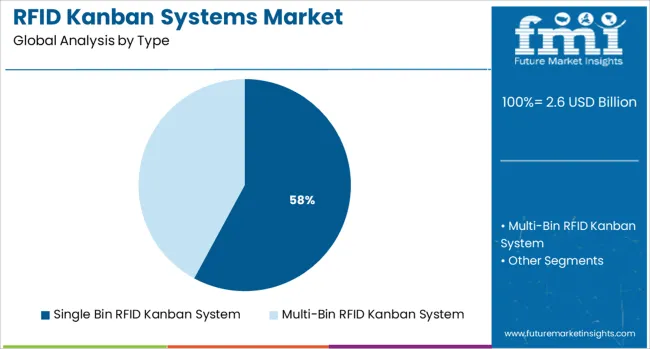
Single-container RFID Kanban systems are projected to account for 57.9% of the market share by 2025, driven by the rapid adoption of simplified replenishment structures where a single container acts as a trigger for real-time replenishment signals. Industry favors this model due to its lower operational complexity and suitability for the transport of fast-moving consumables in hospitals, laboratories, automotive units, and logistics centers. Compared to manual container inspection, this segment reduces clinical errors, accelerates material flow, and improves the accuracy of inventory assessment. Hospitals are adopting single-container systems to eliminate drug shortages and improve compliance with FIFO inventory sorting. As supply chains emphasize lean operations and continuous supply of consumables, the single-container category continues to see strong adoption in both industrial and healthcare sectors.
2、Insights into the sub-sectors of RFID box components
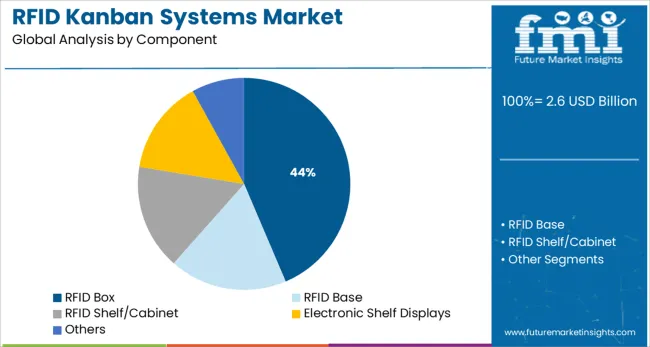
RFID boxes dominated the market in 2025, holding a 43.6% share, as they served as a core hardware unit enabling accurate item identification, automatic replenishment alerts, and seamless integration with warehouse management platforms. These boxes allow employees and suppliers to track inventory status from remote locations and maintain visibility into real-time inventory levels. Automotive repair shops rely on RFID boxes for key management and theft prevention, while hospitals use them to manage critical supplies and ensure compliant replenishment. With the growing demand for traceable, monitored, and fully digitalized materials storage solutions, RFID boxes remain an indispensable component of Kanban system deployments.
III. How does the continuous advancement of RFID signboard systems affect profits?
As e-commerce platforms continue to gain popularity, the increasing demand for domestic and international logistics services is driving market growth. Furthermore, market growth is expected to be further fueled by rising costs of expired medications, the increasing adoption of FIFO (First-In, First-Out) systems, and improved inventory control procedures.
The use of RFID Kanban systems is crucial for managing the massive amounts of data generated by warehouse management and inventory control.
The implementation of these systems helps reduce delivery times. In addition, the increasing risk of clinical errors in manual Kanban processing, coupled with the growing need for streamlined medical inventory management, is driving global demand for RFID Kanban systems.
The growing need for asset tracking, equipment control, and eliminating drug shortages in pharmaceutical warehouses is the primary reason for adopting RFID Kanban systems.
Market growth is expected to be driven by the increasing incidence of clinical errors and the need to reduce costs by simplifying hospital inventory management. Furthermore, the increasing adoption of RFID Kanban systems across various industries provides accurate container tracking, ensuring efficient market operations.
Besides the growing demand in the automotive sector, excess inventory and increased R&D projects also present significant opportunities for the market.
Furthermore, the market is expected to grow rapidly at an even faster pace due to rising drug expiration rates and the increasing adoption of FIFO management. All of these factors have driven the growth of RFID signage systems in the market.
IV. Market Challenges Facing RFID Kanban Systems
The lack of transparency and traceability in the logistics chain often hinders the growth of the RFID market for Kanban systems. Small-scale production and limited product variety challenge the inherent flexibility of Kanban.
When demand fluctuates dramatically, Kanban system-related issues become more apparent in the market. Failure to properly understand Kanban systems at the beginning and end of the year can lead to impacts due to seasonal variations.
With increasing technology leaks in the market, the risk of systems being hacked by cybercriminals is also increasing. Inventory systems may malfunction due to power shortages, causing power outages that could render the entire system inoperable. All of these factors impede the growth of the RFID Kanban system market.
V. Category Insight
1、How can multi-band RFID dashboard systems drive the demand for hospital inventory management?
Based on top-tier type, the market is segmented into single-box RFID Kanban systems and multi-box RFID Kanban systems. Multi-band RFID Kanban systems are projected to grow at a CAGR of 17.9% during the forecast period. The healthcare and retail industries have significant demand for multi-box RFID Kanban systems.
Multi-box RFID Kanban systems improve hospital PAR (Parallel Inventory Management) and replenishment systems by facilitating inventory location and replenishment in hospitals. RFID tags and the dual-box inventory approach enable employees to easily locate and manage materials, reducing stockouts, excess inventory, and lost goods.
The increasing need for businesses to control every step of the production process to ensure smooth product delivery is expected to drive the growth of the multi-box RFID Kanban system market.
2、Why is there such a high demand for RFID boxes?
Based on component type, the market is segmented into RFID boxes, RFID bases, RFID racks/cabinets, electronic rack displays, etc. The CAGR for RFID boxes is projected to reach 17.5% during the forecast period. Kanban is widely used in the manufacturing supply chain for managing and optimizing it. In addition to Kanban systems, RFID boxes facilitate integration with organizational digital infrastructure and warehouse management systems.
Organizations using replenishment boxes can locate items from anywhere when replenishment is needed, and even external suppliers can determine which materials require replenishment via the internet. Therefore, there is significant market demand for RFID Kanban boxes.
The growing demand for car key storage and anti-theft features has driven the widespread adoption of RFID Kanban boxes in the market. Demand for these boxes is also rising due to increased real-time requests to service warehouses, or orders sent via scanning Kanban tags or central warehouses.
六、Nation – Wisdom Insight
1、What drives the demand for RFID signage systems in North America?
North America is projected to account for the majority of the market share by 2025, with estimated revenue representing 42% of the overall market. Some key drivers of this market include continued economic development, strong demand for process optimization, growing interest from healthcare providers in RFID Kanban systems, and increased awareness of the technological advantages that enable the success of RFID Kanban systems.
The region’s well-equipped infrastructure, including hospitals and pharmacies, contributes to market growth. A significant gap exists between the data and availability required for managing hospital inventory due to the lack of comprehensive, real-time inventory management solutions.
Many healthcare institutions have already integrated RFID-based Kanban systems. This market is projected to reach $3 billion during the forecast period, growing at a CAGR of 17.9%.
The growing demand for RFID tags in inventory management systems will continue to drive market growth in the region. These tags are used in boxes to record product replenishment needs as part of the inventory system. All of these factors are expected to gain increasing importance during the evaluation period.
2、How are RFID signage systems performing in the Asia-Pacific region?
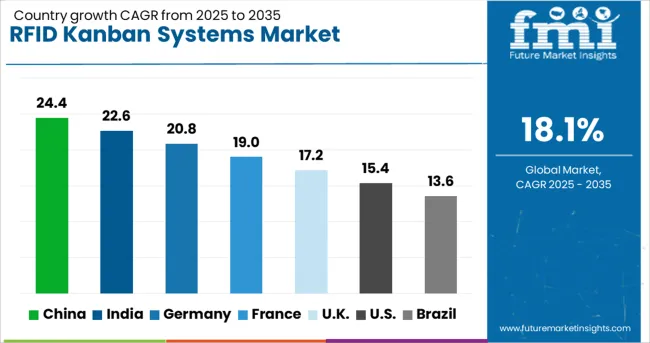
The Asia-Pacific market is projected to grow by 25% during the forecast period. The healthcare and automotive industries are expected to experience rapid growth in China in the coming years. According to FMI, the East Asian market will be dominated by China in the coming years, with a projected CAGR of 17.4% during the forecast period.
The Chinese automotive market has become one of the world’s largest. Using RFID tags and Kanban boxes can improve the efficiency of vehicle identification, dealer anti-theft protection, and car key storage boxes. Tags can provide real-time vehicle location and status information, making them an ideal solution for the automotive industry.
The Japanese RFID Kanban system market is projected to grow by over 16.2% between 2025 and 2035. Since the initial development of Kanban systems in Japan, there has been significant progress in automated dual-box Kanban systems domestically.
Japanese hospitals have already deployed prototype RFID Kanban systems, and such systems are likely to continue to be in demand for further improvements in the healthcare field in the future.
3、Will the UK become a leader in RFID signage systems in the coming years?
The European market is projected to account for 28% of revenue, and will capture the majority of the overall market share by 2025. The growth in demand for RFID Kanban systems in recent years has been driven by increased warehouse expansion and logistics services.
The UK Kanban system market is expected to become the largest in Europe. In the UK, RFID Kanban systems are projected to grow at a CAGR of 16.6% during the forecast period.
Due to the anticipated profitable growth of RFID Kanban systems, many companies are focusing their efforts on developing RFID-enabled Kanban systems for the healthcare, manufacturing, and automotive industries. The significant share of the RFID market is attributed to the presence of numerous companies in the region.
Based on these factors, the market is expected to experience significant growth by 2025. All these factors are driving the development of RFID Kanban systems in the region.
VII. Competitive Landscape
Global RFID signage system manufacturers are launching innovative products to help diversify their portfolios, enabling them to invest in R&D while expanding market reach. To gain a competitive edge, players are also investing in mergers and acquisitions and licensing agreements.
For example:
VIII. Key Members
IX. Key Segments Covered in the RFID Kanban System Market Report
1、Classified by type:
2、Divided by components:
3、Categorized by application:
4、Classified by data center type:
5、Divided by vertical direction:
6、By region:

An in-depth analysis of the global RFID market from 2024 to 2031, covering technology evolution, market structure, passive vs active RFID, and real-world adoption trends.
More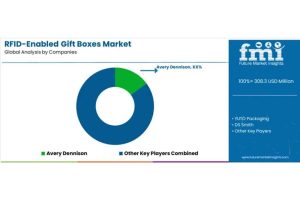
The global RFID-enabled gift box market is projected to grow from USD 308.3 million in 2026 to USD 480.7 million by 2036 at a 4.5% CAGR. Explore market outlook, application demand, product types, country-level growth, and key packaging companies s...
More
The RFID blood monitoring system market is projected to grow from USD 127.4 million in 2024 to USD 234.7 million by 2034, driven by traceability requirements, hospital digitization, and regulatory compliance in blood management.
More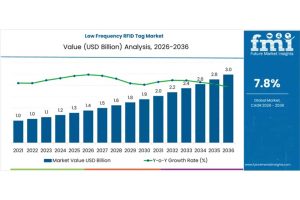
Explore the global low-frequency RFID tag market from 2026 to 2036, including market size, growth outlook, technology and application segmentation, country-level CAGR analysis, and competitive landscape insights.
More