RFID Module vs. RFID Reader: What’s the Difference?
How to Choose the Best RFID module or RFID reader Solution for Your Project?
Choosing the right RFID technology is crucial for the successful implementation of your project. This guide will explore the benefits of RFID modules (RFID-m) and RFID readers (RFID-r) and how to leverage each to meet your specific project requirements.
Understanding RFID System Architecture
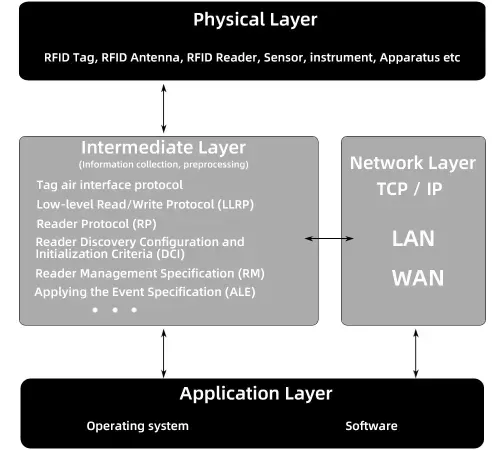
RFID systems are governed by standards such as ISO/IEC, EPC Global, UID, AIM Global, and IP-X. Using the widely adopted EPC Global standard as an example, RFID systems are structured into four layers:
Physical Layer: Includes hardware components like tags, antennas, readers, sensors, and other physical devices.
Middleware Layer: Comprises middleware and APIs responsible for initial processing of data collected by readers and passing it to the network or application layers.
Network Layer: Functions as the communication bridge within the system and with external systems, facilitating data exchanges.
Application Layer: Encompasses backend software and enterprise Operation management system that utilize RFID data.
The EPC standard also standardizes data formats and transmission processes, ensuring that RFID system deployments are organized and systematic.
What is RFID-m (Radio Frequency Identification of Module)?
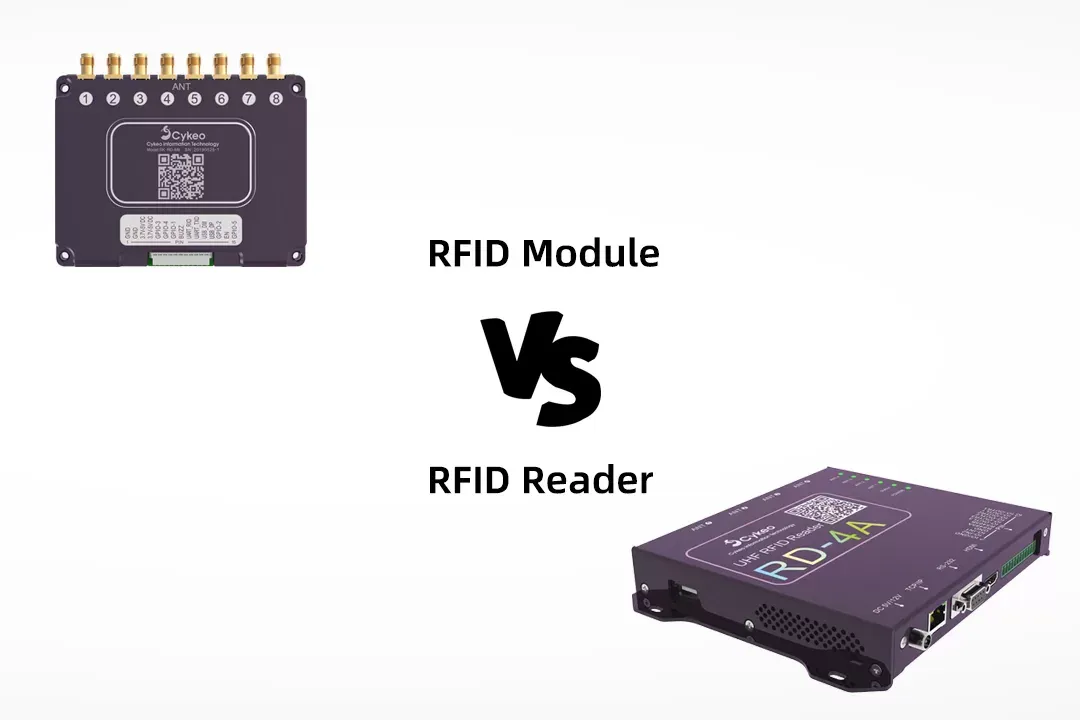
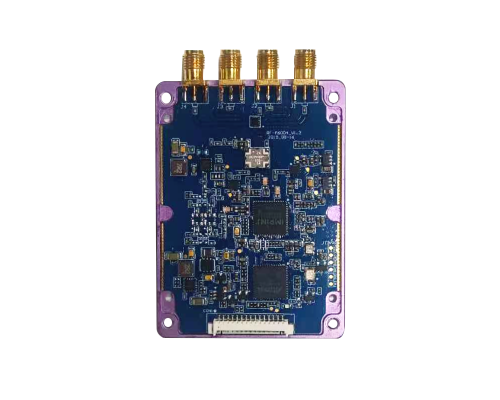
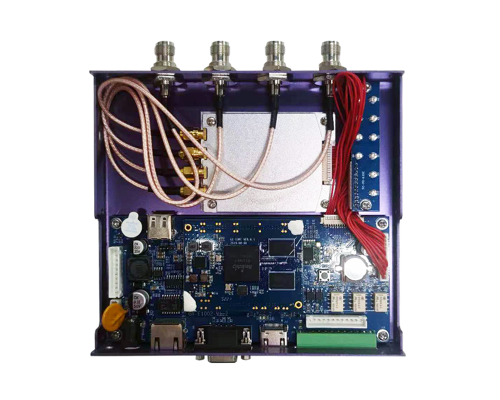
RFID modules are intermediate components in RFID readers, consisting of an antenna interface, chip motherboard, and a 15-pin interface. They activate passive RFID tags with radio waves, RFID Chip decode the information from the tag return, and transmit the data to the control motherboard through the 15-pin interface.
The EPC standard also standardizes data formats and transmission processes, ensuring that RFID system deployments are organized and systematic.
Applications and Advantages of RFID Modules
Applications
Advantages
Flexibility: RFID modules can be customized to meet specific requirements for range, speed, and security, making them versatile for various applications.
Low Power Consumption: Designed to be energy-efficient, extending battery life and fitting well in low-power applications.
Cost Efficiency: Reduces the need for significant R&D investment. Purchasing Cykeo RFID modules allows for rapid deployment and technical support.ts and transmission processes, ensuring that RFID system deployments are organized and systematic.
What is RFID-r (Radio Frequency Identification of Reader)?
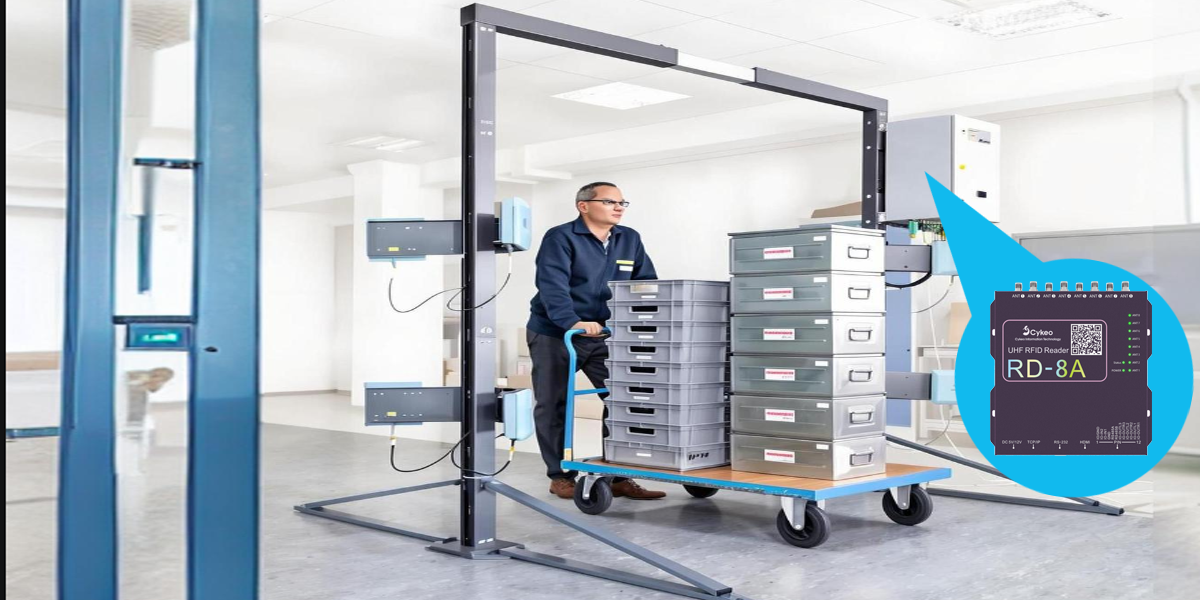
RFID readers are essential hardware in the RFID system’s physical layer. Fixed readers, for example, consist of RFID modules, control modules, and expansion interfaces. They provide comprehensive read/write capabilities for RFID tags. An example is the CK-R4L 4H TNC Prot RFID Reader, which integrates easily with RFID antennas and system terminals for straightforward applications.
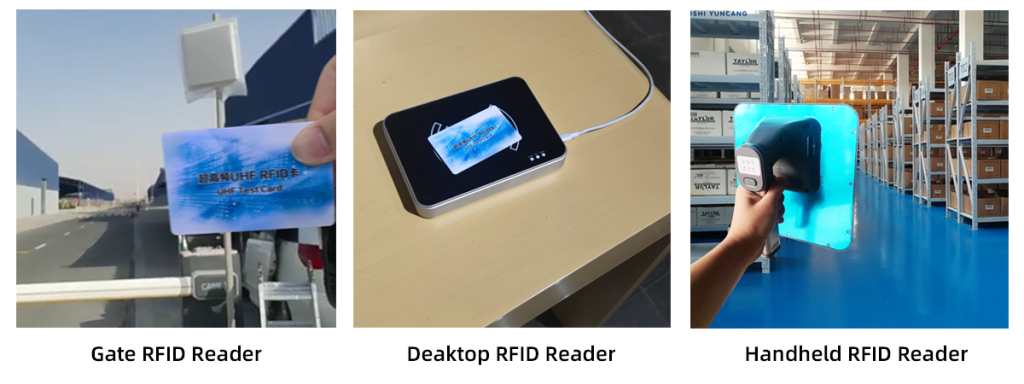
Applications: Includes Fixed RFID readers, Desktop RFID readers, and Handheld RFID readers.
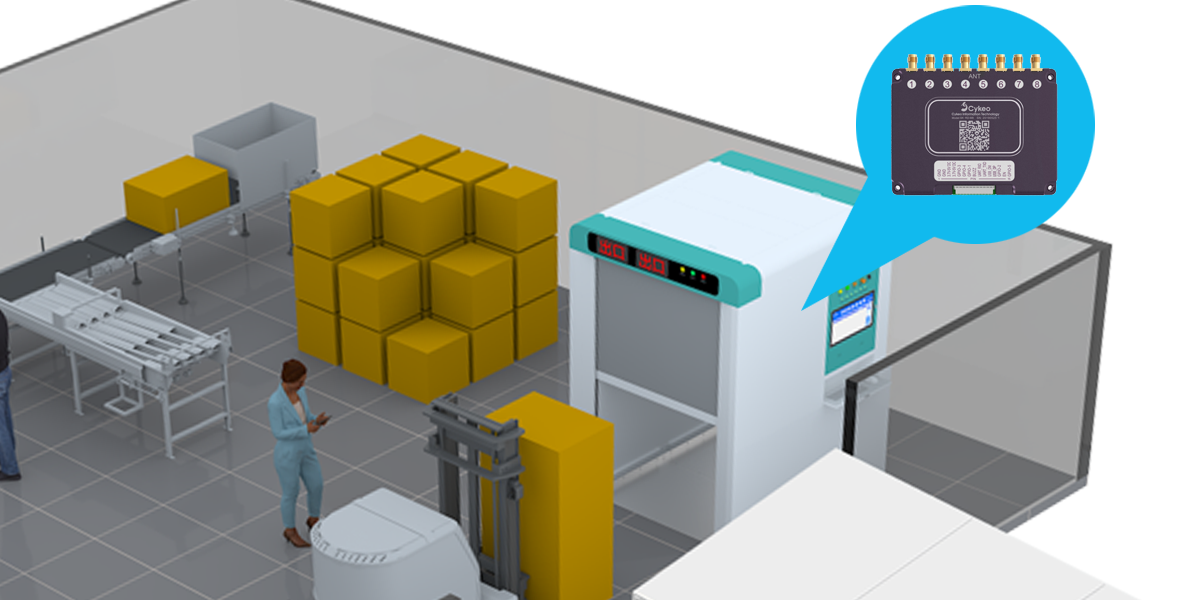
Fixed RFID Readers: Typically used in warehouses for bulk inventory management and access control. High-power antennas can be added for extended read ranges, suitable for RFID gates and toll booths.
Desktop RFID Readers: Used for reading, writing, and modifying RFID tags, including card issuers and tag converters.
Handheld RFID Readers: Useful for reading, modifying, and locating RFID tags, such as PDAs and RFID scanners.
Applications and Advantages of RFID Readers
Applications
Advantages
Functionality: RFID readers can read and write data, making them valuable for data interaction needs.
Efficiency: Capable of reading multiple tags simultaneously, enhancing data collection and processing speed, ideal for large-scale tracking and inventory.
Interference Resistance: Operates effectively in challenging environments with metals and liquids due to its strong resistance to interference.
Security: Supports data encryption and authentication to ensure secure data transmission and prevent unauthorized access.ic.
Comparing RFID Modules and RFID Readers
Project Flexibility: RFID modules offer greater flexibility in designing access control systems, smart terminals, and cabinets, accommodating custom spatial and wiring requirements. They can be integrated into existing systems without complete redesigns, speeding up development and simplifying future upgrades.
Integration and Modularity: RFID readers provide high integration by combining components like CPU, GPU, memory, and connectivity modules. This is beneficial for size and power-efficient applications but can limit flexibility due to the need for layout redesigns.
Conversely, Cykeo’s modular approach enhances flexibility while retaining integration benefits. Users can test applications on different devices with various RFID control motherboards and quickly adapt to new technologies or components by replacing the motherboard, which accelerates development and reduces time-to-market.
Function Expansion: RFID modules allow for rapid adaptation to unknown environmental conditions and project-specific needs. They are more flexible and adaptable compared to RFID readers, which are more integrated for specific use cases.
Advantages and Disadvantages
Feature
RFID Module
RFID Reader
Flexibility
High (Modular Components)
Low (System Integration)
Initial Cost
Low Initial Cost, Increases with Features
Moderate Initial Cost, Increases with Features
Development Time
Shorter for Modular Systems
Slightly Longer for Light Integration
Project Risk
Lower (Easier to Replace Multiple Ports)
Higher (Tied with System Control Board)
Application Adaptability
Strong, Quick Scalability
Slightly Lower (Tied with System Processor)
*Only for the project application reference, do not make an absolute guarantee
Conclusion
Choosing between RFID modules and RFID readers is a critical decision based on your project’s specific needs and constraints. Consider factors such as flexibility, cost, and application requirements to determine the best solution.
If you’re planning your next RFID IoT project, assess your requirements carefully and consult experienced hardware engineers to choose the right RFID module or reader. The correct choice can lead to better performance, cost savings, and project success. Given the complexity and rapid development in IoT and AI, a strategic approach to selecting RFID technology is more crucial than ever. Stay informed and make a well-considered choice! Subscribe mail.
Cykeo – Dedicated to the R&D terminal product, manufacturing and assisting software system integrators to bring the projects to reality
Cykeo offers a wide range of RFID modules, RFID control board, RFID antennas, RFID reader, RFID terminal products and RFID IoT solutions. With extensive manufacturing experience and IoT solution knowledge, Cykeo provide free SDK, open API interfaces, and comprehensive support to software and system integrators, offering demos and advice on innovative product designs. Our unparalleled support have earned the trust of system integrators, helping them confidently overcome project challenges.
Cykeo-Your RFID project implementation expert. For more information about our products and solutions. Contact us now!
Discover whether handheld RFID readers can scan through metal or liquid containers. Learn about anti-metal tags, UHF limitations, and best practices for reliable detection.
Discover how an RFID door lock access control system works, its key benefits, and real-world applications in offices, hotels, schools, warehouses, and hospitals. Learn why RFID access control is more secure and flexible than traditional locks.
Discover the critical differences between passive and active RFID tags. Learn how Cykeo’s solutions optimize inventory tracking, security, and cost-efficiency.
 Cykeo RFID IoT Solution Products R&D Manufacturer