 Cykeo RFID IoT Solution Products R&D Manufacturer
What is Load Modulation in RFID?
115Wondering "what is load modulation in RFID"? This CYKEO guide explains the technology in simple terms, showing how passive RFID tags communicate back to the reader without a battery.
MoreAll RFID Product
If you’re asking how much RFID installation costs, you’re already ahead of most buyers. But here’s the part nobody likes hearing upfront:
There is no single number.
I’ve seen small RFID setups come in under $3,000. I’ve also worked on projects that quietly crossed $120,000 without looking “large” on paper. Same technology, very different outcomes.
And most of the difference? It doesn’t come from the tags.
A realistic range for how much RFID installation costs:
That’s not theory. That’s what I’ve seen quoted, installed, and debugged.
According to RAIN RFID Alliance, RFID system costs vary widely depending on scale, integration complexity, and environment. Hardware is just one piece.
People assume the biggest cost is tags.
It’s not.
A fixed RFID reader typically runs between $800 and $3,000 per unit depending on performance and environment tolerance.
RFID Handheld readers? Often $1,000–$4,000.
In one warehouse job, we planned for 4 readers. Ended up installing 7. Why? Blind spots. Metal racks changed everything.
That alone shifted the budget by nearly $9,000.
Passive RFID tags can cost:
Sounds negligible—until you need 50,000 units.
The GS1 notes that tagging at scale is one of the most significant cost drivers in supply chain RFID adoption.
This is where people underestimate.
Basic software? Maybe a few thousand.
Custom integration with ERP or WMS? That’s where it jumps—fast.
I’ve seen software costs exceed hardware costs. Not rare. Not surprising.
Cabling, mounting, testing—this part looks boring on paper.
It isn’t.
In one project, running cables through a high-ceiling warehouse added two extra days of labor. Lifts, safety compliance, routing around existing infrastructure.
That added cost wasn’t in the initial quote.
According to the International Data Corporation, implementation and integration can account for 30–50% of total RFID project costs.
That matches what I’ve seen.
RFID hates metal and liquids. Not completely—but enough to complicate things.
More interference = more readers = higher cost.
You want 90% read accuracy? Easy.
You want 99.9%?
That’s where cost climbs. Extra antennas. More testing. Calibration time.
Real-time tracking systems require:
Batch scanning setups are far cheaper.
I’ve worked with different vendors, and one thing I’ve noticed with CYKEO is their approach to system matching.
Not overselling.
In one mid-sized warehouse deployment, instead of pushing a full real-time system, we scaled it down to a zone-based solution. Fewer readers, less integration complexity.
The result?
That’s rare. Most vendors push maximum configuration.
It’s not choosing the wrong hardware.
It’s skipping the site survey.
Every time I’ve seen budgets blow out, it traced back to one thing: assumptions made before seeing the environment.
RF signals don’t behave like spreadsheets.
They bounce. They weaken. They surprise you.
If you want a realistic approach to how much RFID installation will cost:
Because something will change. It always does.
RFID isn’t expensive because of the technology.
It’s expensive when expectations don’t match reality.
The best installations I’ve seen weren’t the biggest or the most advanced—they were the ones that matched the environment and the actual workflow.
So if you’re still asking how much RFID installation costs, you’re asking the right question.
Just don’t expect the first answer to be the final one.
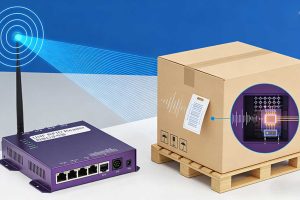
Wondering "what is load modulation in RFID"? This CYKEO guide explains the technology in simple terms, showing how passive RFID tags communicate back to the reader without a battery.
More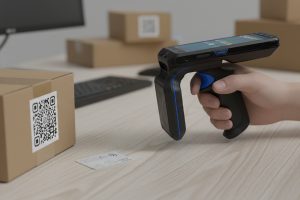
CYKEO CK-B3L is a rugged uhf rfid bluetooth handheld reader with long read range, Android system and stable performance. This UHF RFID Handheld Reader is designed for warehousing, logistics, manufacturing and outdoor field operations.
More
Protect your RFID reader network from cyberattacks with encryption, access controls, and Cykeo’s security tools. Learn how to safeguard data and prevent breaches.
More
long-range industrial RFID readers for warehouse, production line, and logistics operations.integration with RFID antennas,Custom RFID hardware solution providers.
More