These days, many factories, warehouses, and retail businesses are using RFID to track their inventory. But when it comes to choosing between HF and UHF, a lot of people get stuck. Which one’s better? Honestly, there’s no one-size-fits-all answer—it really depends on your needs. Here’s a breakdown to help you understand the differences and decide what works best for your setup.
What Are HF and UHF RFID?
HF, or high-frequency RFID, runs at around 13.56 MHz and usually reads tags from just a few centimeters up to about a meter. Its strength is that it works well around tricky materials like metal and water. The downside is it can only read one or a few tags at a time, and it’s not super fast. That’s why HF is commonly used for access control, tickets, medical devices, or libraries—places where there aren’t many items, but accuracy is critical.
UHF, or ultra-high-frequency RFID, operates between 860–960 MHz. Passive tags can be read from several meters away, sometimes over ten meters, and it can scan lots of tags at once. It’s cheap, fast, and perfect for large warehouses or logistics setups. The trade-off is that it’s more sensitive to metal and water, so you usually need special tags or antenna setups. In short: HF is close-up, slower, and precise; UHF is long-range, fast, and built for high volume.
Differences in Applications
HF tends to show up in access systems, payment, libraries, and medical tracking—anywhere you handle only a few items at a time and need high accuracy. UHF shines in warehouses, logistics centers, retail stock rooms, and bulk goods management, because it can read a lot of tags at once, saving time and cutting down on manual work.
Breaking it down further, HF has a shorter read range and can’t handle big batches, but it’s stable and low-cost, which makes it great for smaller operations. UHF can reach farther, read hundreds of tags at once, and is very efficient, though it does need a setup that works well with the environment—it’s perfect for large-scale operations.
Why UHF RFID Is Ideal for Factory Warehousing
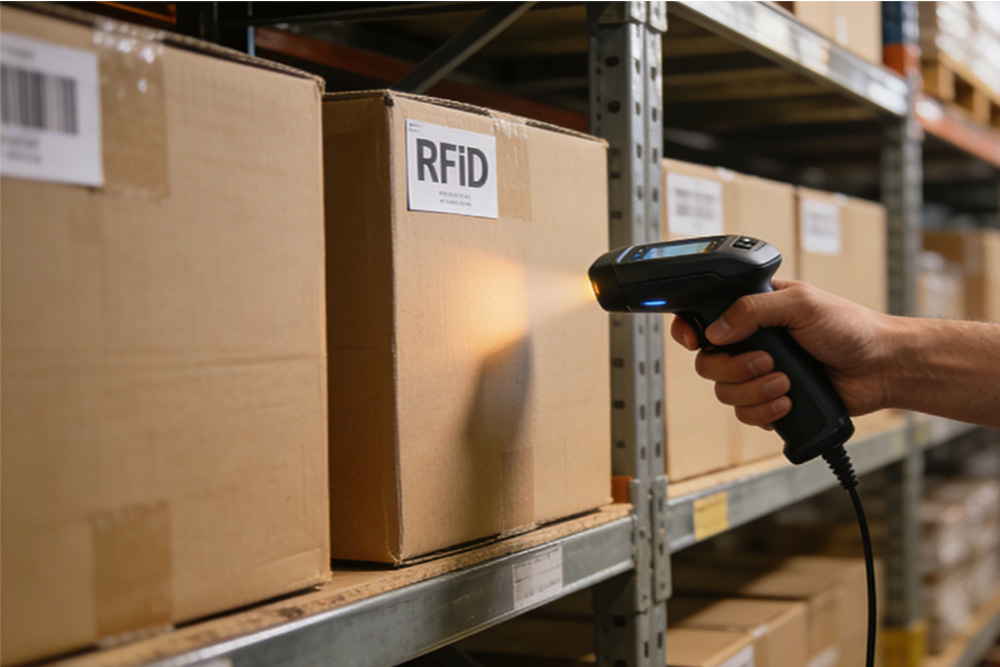
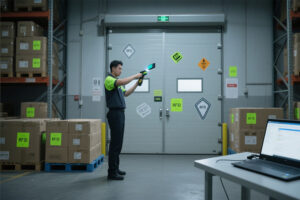
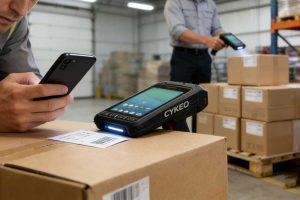
For warehouses with a wide variety of products, frequent inventory movement, and high shipment volumes, UHF has clear advantages. You can scan an entire row of shelves at once instead of checking items individually. Even products inside boxes can get read from a distance, reducing manual work. Plus, the tags are inexpensive, so scaling across a big warehouse isn’t a problem.
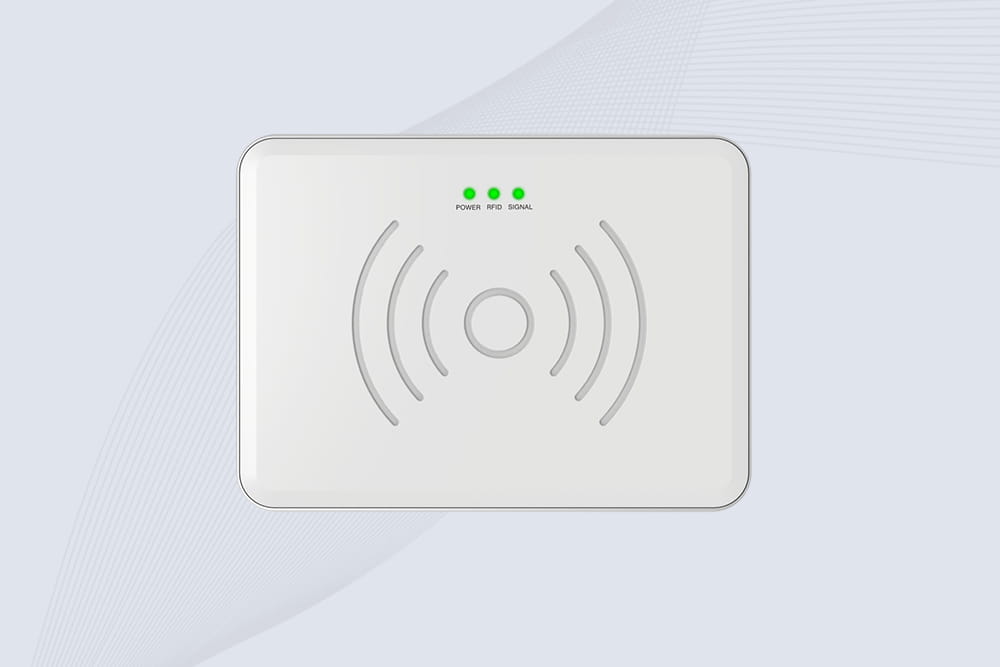
For example, the CK‑D8C Retail UHF RFID Reader runs at 840–960 MHz and can scan hundreds of tags at once. It’s perfect for warehousing, retail, and logistics applications. Stock-taking, inbound/outbound scanning, managing bulk shipments—it handles it all. Using a system like this makes warehouse operations more automated, accurate, and reliable, giving your supply chain a smoother flow and a competitive edge.
Combining HF and UHF RFID
HF and UHF can also work together. Many companies use UHF as the main system and HF as a supplement. UHF handles the bulk of warehouse operations—inventory, logistics, and shipments—while HF takes care of anti-counterfeiting, inspections, or verifying high-value items up close. This approach ensures efficiency without sacrificing precision.
Conclusion
HF RFID is best for close-range, high-accuracy, small-scale applications. UHF RFID is ideal for long-range, fast batch reading, and large-scale warehouse or logistics operations. For most factories, pairing UHF with a device like the CK‑D8C is the most cost-effective choice. If you also need close-range verification or anti-counterfeiting, HF can be added as a complementary system.
Choosing the right RFID setup makes inventory management smarter and easier, reduces mistakes, keeps customers confident, and lays a solid foundation for future growth.
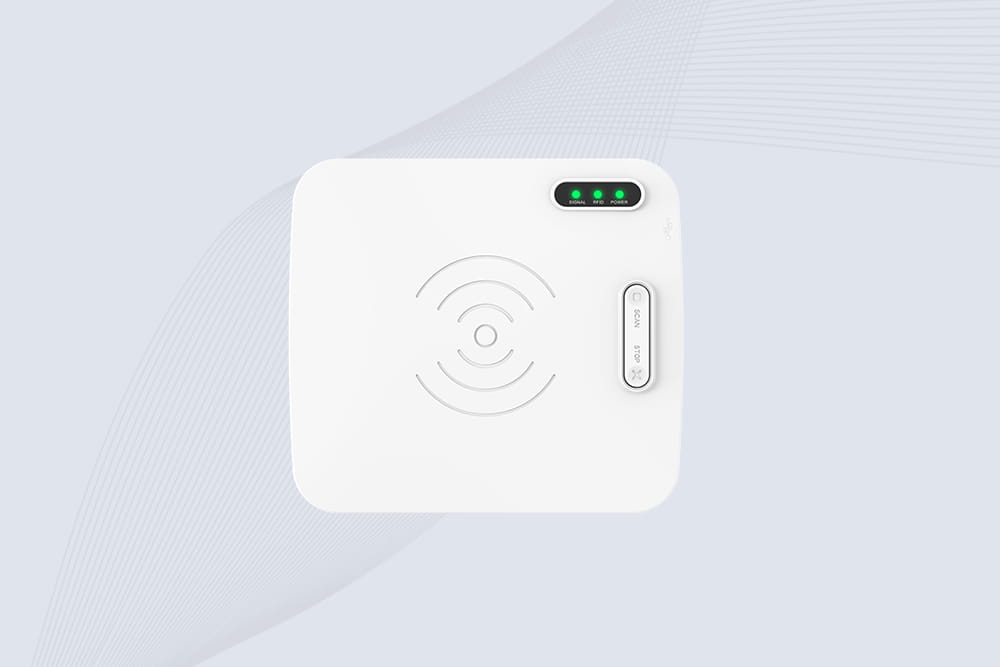
CYKEO CYKEO-D1LA USB RFID Reader is a compact desktop solution with near-field control for precise tag reading and encoding. Powered by USB, supporting ISO 18000-6C, and built for stable batch writing, this usb rfid tag reader fits retail, libraries, offices, and controlled RFID encoding tasks.
CYKEO CYKEO-D1L RFID scanner USB is a compact desktop UHF RFID scanner designed for short-range tag writing and verification. This usb rfid scanner supports batch encoding, stable 0–26 dBm output, and works across Windows, Linux, and Android systems.
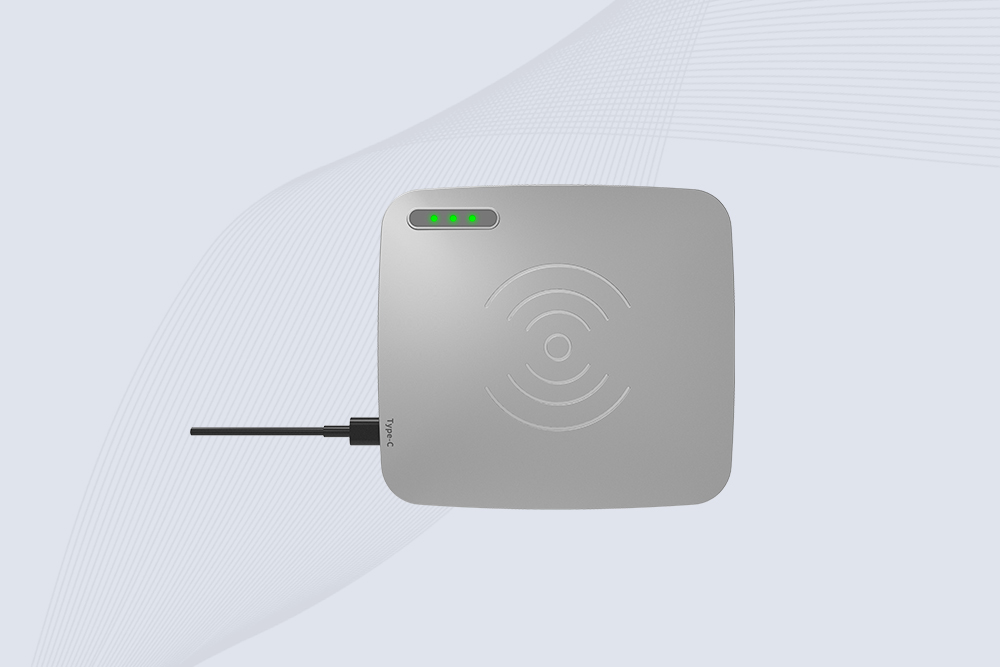
CYKEO CYKEO-D1C USB RFID Card Reader is a near-field UHF desktop writer designed for secure, short-range tag encoding. With USB-C connectivity and stable 26 dBm output, this rfid reader usb c is ideal for badge issuance, label encoding, and controlled desktop RFID workflows.
CYKEO CYKEO-D2L RFID Reader USB is a compact desktop encoder built on the Impinj R500 chip. With near-field control and stable USB power, this usb rfid card reader delivers precise tag writing for offices, retail counters, and small-scale logistics encoding tasks.
In industries like logistics, warehousing, and retail, traditional identification processes often face challenges, such as inefficiency, high error rates, and complex operations. As businesses scale, these limitations become increasingly...
in-depth breakdown of the entire RFID tag testing process—from design validation to real-world field trials—featuring warehouse and Arduino case studies. Covers practical methods for testing read range, orientation sensitivity, interference resis...
Discover the CYKEO CK-B5L, a high-performance RFID reader for iPhone designed for developers building logistics, retail, healthcare, and asset-tracking systems. A reliable iPhone RFID scanner with long battery life, fast tag capture, and seamless ...
 Cykeo RFID IoT Solution Products R&D Manufacturer