 Cykeo RFID IoT Solution Products R&D Manufacturer
RFID Printer Market Outlook 2025–2035: What Is Actually Changing
148An in-depth look at the RFID printer market from 2025 to 2035, covering growth drivers, risks, regional trends, and real-world adoption across key industries.
MoreAll RFID Product
I. Market Trends in Medical RFID
The medical RFID market is currently undergoing a transformative phase, driven by technological advancements and a growing emphasis on operational efficiency within the healthcare environment. The integration of Radio Frequency Identification (RFID) systems is becoming increasingly widespread, providing enhanced tracking capabilities for medical devices, pharmaceuticals, and patient management. This trend appears to stem from the need for improved inventory control, reduced medication errors, and enhanced patient safety. As healthcare providers seek to optimize operations, the adoption of RFID technology is expected to expand, leading to streamlined processes and better resource allocation. Furthermore, the medical RFID market appears to be driven by the growing demand for real-time data access and analytics. Healthcare organizations are increasingly recognizing the value of data-driven decision-making, and RFID systems can facilitate this. By providing accurate and timely information, these technologies promise to improve patient care and operational processes. In addition, the ongoing development of RFID solutions tailored to specific healthcare applications indicates that customization and adaptability will be key to the future. As the market evolves, stakeholders must be vigilant about emerging trends and innovations that could reshape the healthcare landscape.
1、Enhanced application of RFID in asset management
Healthcare institutions are increasingly using RFID technology for effective asset management. This trend indicates a shift towards real-time tracking of medical devices, improving operational efficiency and reducing the risk of loss or misplacement.
2.Integration with IoT and Data Analytics
The integration of RFID technology with Internet of Things (IoT) devices and data analytics is becoming increasingly evident. This integration foreshadows a future where healthcare providers can leverage comprehensive data insights to improve patient outcomes and optimize operations.
3.Focus on Patient Safety and Compliance
There is a growing emphasis on using RFID systems to enhance patient safety and ensure compliance. This trend highlights the potential of RFID technology in reducing medication errors and improving overall healthcare quality.
II. Driving Factors of the Medical RFID Market
1.Enhanced Inventory Management
The medical RFID market is undergoing a significant shift towards more robust inventory management solutions. RFID technology facilitates real-time tracking of medical supplies and equipment, reducing stockouts and excess inventory. This capability is particularly critical in hospitals, where the supply of essential items can directly impact patient care. According to recent data, hospitals using RFID systems report inventory cost reductions of up to 30%. This efficiency not only streamlines operations but also contributes to better financial management within healthcare institutions. With the continued growth in demand for efficient inventory management, the medical RFID market is expected to see further investment in solutions that are poised to optimize supply chain processes.
2.Improved Patient Care and Safety
The medical RFID market is increasingly focused on improving patient care and safety through the implementation of RFID technology. By accurately tracking patients, medications, and medical devices, RFID medical devices help reduce errors related to patient identification and medication administration. Studies have shown that hospitals adopting RFID solutions have significantly reduced medication errors and improved overall patient safety. Furthermore, the ability to monitor the location and status of critical medical equipment ensures that healthcare providers can deliver care promptly and effectively. As patient safety remains a top priority for healthcare institutions, the medical RFID market is expected to grow as more institutions adopt these technologies to safeguard patient well-being.
3.Regulatory Compliance and Standards
The healthcare RFID market is increasingly driven by regulatory and industry standard compliance requirements. Healthcare organizations are required to accurately record medical devices and pharmaceuticals, which can be efficiently managed through RFID technology. Compliance with regulations such as the FDA’s Unique Device Identification (UDI) system necessitates the robust tracking mechanisms provided by RFID. This technology not only helps meet regulatory requirements but also enhances traceability and accountability within healthcare systems. As regulatory pressure increases and organizations seek to implement RFID solutions that promote compliance and operational transparency, the healthcare RFID market is expected to expand.
4.Integration with Advanced Technologies
The healthcare RFID market is increasingly integrating with advanced technologies such as the Internet of Things (IoT) and Artificial Intelligence (AI). This integration enables more sophisticated data analytics and real-time monitoring capabilities, improving the overall effectiveness of RFID systems. For example, IoT-enabled RFID solutions can provide insights into device usage patterns, helping healthcare organizations optimize asset utilization. Furthermore, AI algorithms can analyze data collected by RFID systems, predict trends, and optimize decision-making processes. As healthcare organizations pursue innovation and efficiency, the integration of RFID with these advanced technologies is expected to drive the development of the healthcare RFID market and foster a more connected and intelligent healthcare ecosystem.
5.Cost Reduction and Operational Efficiency
The medical RFID market is driven by healthcare organizations’ need to reduce costs and improve operational efficiency. RFID technology enables organizations to automate various processes, thereby reducing labor costs associated with manual tracking and inventory management. By streamlining operations, healthcare providers can allocate resources more effectively, thus improving service quality. Reports show that hospitals implementing RFID systems have achieved approximately 20% operational cost savings. This economic incentive, coupled with the potential to improve patient outcomes, makes RFID a highly competitive solution for healthcare organizations. With increasing pressure to reduce costs, the medical RFID market is expected to see a surge in adoption.
III. Market Segmentation Insights
1、By application category: Inventory management (largest) and patient tracking (fastest growing).
The medical RFID market is segmented into several applications with different characteristics. Inventory management accounts for the largest share of this segment and is the cornerstone of optimizing inventory levels and reducing waste in healthcare institutions. In contrast, patient tracking is rapidly gaining attention, primarily driven by the growing need for efficient patient flow management and improved care services. This segment reflects the healthcare sector’s shift towards more patient-centric solutions.
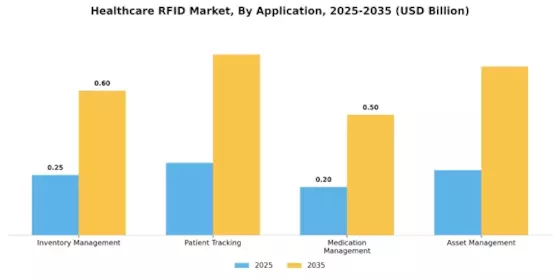
Inventory management is a dominant application in the medical RFID market, renowned for its ability to simplify inventory control and reduce operating costs. This segment leverages RFID technology to ensure timely supply of medical supplies and equipment when needed, preventing stockouts and reducing excess inventory. Meanwhile, patient tracking is emerging as a crucial application for improving patient safety and operational efficiency. It utilizes real-time location data to monitor patients’ movements within healthcare facilities, addressing key issues such as reducing wait times and improving the overall patient experience. As hospitals and clinics recognize the importance of these applications, increased investment in both areas is expected to support broader healthcare goals.
2、By end-use: Hospitals (largest) and clinics (fastest growing)
In the medical RFID market, hospitals are the largest segment due to their widespread need for asset tracking, patient management, and inventory control. This dominance is attributed to the increasing adoption of RFID technology to improve operational efficiency and patient care. Following hospitals, clinics are the fastest-growing segment, increasingly adopting RFID solutions to streamline operations and enhance patient safety, demonstrating a shift towards advanced medical solutions even in smaller institutions.
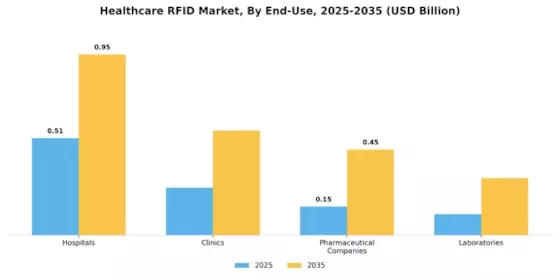
Hospitals are at the forefront of the medical RFID market, leveraging advanced RFID solutions to optimize asset management, reduce errors, and ensure patient safety through real-time tracking of medical equipment and supplies. This segment benefits from significant investments in medical technology, with RFID playing a crucial role in improving patient mobility and operational efficiency. Meanwhile, clinics are emerging as an important segment, utilizing RFID technology to enhance patient identification, medication management, and workflow. This trend stems from the needs of small and medium-sized healthcare providers to improve service quality, effectively manage resources, and ensure patient safety, making clinics a promising area for future RFID development.
3、Categorized by product type: Tags (largest) and Software (fastest growing).
The medical RFID market exhibits a significant market share distribution across its product types. RFID tags are the largest segment, widely used in hospitals for patient tracking, inventory management, and asset tracking. Readers are the next most important, serving as the key interface for facilitating interaction with these tags. Software and services follow closely, but demand is rapidly increasing due to the growing need for integrated solutions that enable optimal management of RFID data in healthcare environments.
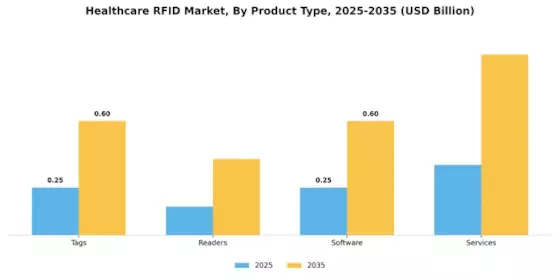
RFID readers play a dominant role in the medical RFID market, serving as key hardware for capturing RFID tag data to streamline processes. The versatility of reader forms has led to their widespread adoption across various medical applications, from hospital tracking to medication dispensing. Meanwhile, services related to RFID implementation and maintenance are becoming a key driver of market growth. As healthcare providers increasingly seek complete solutions that include training, system integration, and ongoing support, service providers are poised for rapid expansion, reflecting a shift towards a comprehensive RFID ecosystem.
4、Classified by technology: Active RFID (largest) and Passive RFID (fastest growing).
The medical RFID market exhibits a diverse distribution across three technology segments: active RFID, passive RFID, and semi-passive RFID. Active RFID currently holds the largest market share, thanks to its comprehensive ability to efficiently track high-value assets and patients. In contrast, passive RFID, while smaller in scale, is rapidly emerging due to its lower cost and ease of integration into existing systems. This dynamic reflects the competitive nature of the healthcare industry, where different technologies cater to different needs.
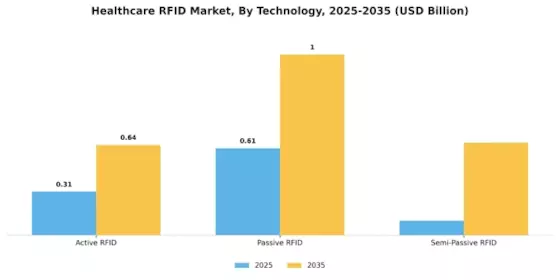
Active RFID systems are characterized by their battery-powered tags, enabling continuous signal transmission and providing superior tracking capabilities for critical assets, patients, and equipment in hospitals. Their dominance is attributed to features such as extended read range and real-time data collection. Passive RFID, on the other hand, represents an emerging trend, offering a cost-effective solution for tagging and monitoring supplies and pharmaceuticals. These RFID tags, driven by reader signals, are lighter and less expensive, making them increasingly popular in hospitals for inventory management and workflow improvements, highlighting the shift towards more economical tracking solutions.
IV. Regional Insights
1、North America: Leading Innovation and Applications
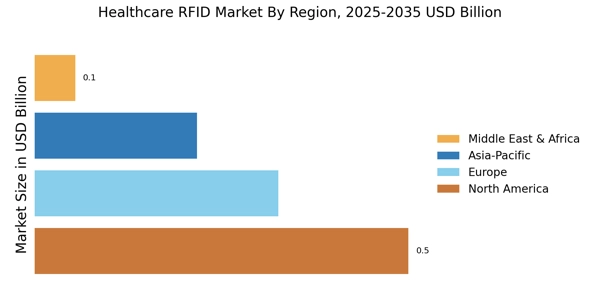
North America is the largest market for healthcare RFID, accounting for approximately 45% of the global market share. Growth in the region is primarily driven by the increasing demand for efficient inventory management, patient tracking, and regulatory compliance. The adoption of advanced technologies and government-supported initiatives for healthcare digitization are further fueling market expansion. The United States is the leading contributor, followed by Canada, which is rapidly expanding its market share.
2、Europe: Regulatory Support and Growth
Europe is the second-largest market for medical RFID, accounting for approximately 30% of the global market share. The region benefits from stringent regulations aimed at improving patient safety and operational efficiency. Countries like Germany and the UK are leading in adoption rates, driven by healthcare reforms and technological advancements. In the competitive landscape, key players such as STMicroelectronics and Avery Dennison have emerged, boosting innovation and market penetration.
3、Asia Pacific: Emerging Market Potential
The Asia-Pacific region is experiencing significant growth in the healthcare RFID market, accounting for approximately 20% of the global share. This expansion is driven by increased healthcare spending, a growing patient population, and a growing emphasis on healthcare automation. Countries like China and India are leading the way in investment in healthcare infrastructure and technology applications. The competitive landscape is evolving, with both local and international companies vying for market share.
4、The Middle East and Africa: Untapped Opportunities
The Middle East and Africa are emerging but promising regions for the medical RFID market, accounting for approximately 5% of the global market share. This growth is driven by increasing investment in healthcare and a focus on improving patient care. Countries like the UAE and South Africa are leading this trend, with government initiatives aimed at modernizing their healthcare systems. The competitive landscape is still evolving, with established players providing opportunities for newcomers.
V. Key Players and Competitive Insights
The medical RFID market is currently exhibiting a dynamic competitive landscape, driven by the growing demand from healthcare institutions for efficient asset management, patient tracking, and inventory control. Key players such as Cykeo (China), Zebra Technologies (USA), Impinj (USA), and Avery Dennison (USA) are strategically positioned to leverage technological advancements to improve operational efficiency. Zebra Technologies (USA) focuses on innovation, developing advanced RFID solutions that seamlessly integrate with existing healthcare systems, while Impinj (USA) emphasizes collaborations with healthcare providers to expand market reach. Avery Dennison (USA) is actively pursuing regional expansion, particularly in emerging markets, to capitalize on the increasing adoption of RFID technology in healthcare settings. These strategies collectively contribute to an increasingly competitive environment centered on technological innovation and strategic partnerships.
In terms of business strategy, companies are increasingly localizing manufacturing and optimizing supply chains to enhance their responsiveness to market demands. The medical RFID market appears moderately fragmented, with several key players wielding influence across multiple segments. This fragmentation has led to a variety of solutions that meet the specific needs of healthcare providers while also fostering competition, driving innovation and efficiency.
In August 2025, Zebra Technologies (USA) announced a partnership with a leading hospital network to implement a comprehensive RFID tracking system designed to improve patient safety and operational efficiency. This strategic move underscores Zebra’s commitment to enhancing healthcare through technology, positioning the company as a leader in integrating RFID solutions for clinical settings. The collaboration is expected to significantly improve asset utilization and patient mobility, strengthening Zebra’s competitive advantage.
In September 2025, Impinj (USA) launched a new series of RFID tags designed specifically for the healthcare industry, capable of withstanding sterilization processes. This innovation is particularly significant because it meets the critical need for reliable tracking of medical devices and supplies. By introducing these specialized tags, Impinj not only enriches its product portfolio but also solidifies its market position by meeting the stringent requirements of healthcare providers.
In July 2025, Avery Dennison (USA) expanded its RFID solutions, adding a software platform for integration with existing hospital management systems. This development is significant because it facilitates seamless data exchange and improves the overall efficiency of healthcare operations. By focusing on software integration, Avery Dennison is poised to differentiate itself in a competitive market, attracting healthcare organizations seeking comprehensive solutions to streamline their operations.
Cykeo‘s RFID devices can seamlessly interface with software platforms that integrate with major hospital management systems, providing APA interfaces and SDK development kits, and are supported by a strong technical team.
As of October 2025, the competitive landscape of the medical RFID market is increasingly characterized by the integration of digitalization, sustainability, and artificial intelligence. Strategic alliances among key players are shaping the market, fostering innovation, and enhancing service quality. Looking ahead, competitive differentiation is expected to shift from traditional price-based strategies to technological innovation, supply chain reliability, and the ability to provide customized solutions that meet the unique needs of healthcare providers.
VI. Summary of the Medical RFID Market
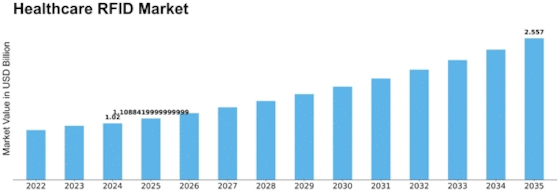
According to market research and future analysis, the medical RFID market size is estimated at $1.02 billion in 2024. The medical RFID industry is projected to grow from $1.109 billion in 2025 to $2.557 billion in 2035, representing a compound annual growth rate (CAGR) of 8.7% over the forecast period.
1、Key Market Trends and Highlights
The medical RFID market is experiencing strong growth driven by technological advancements and the need for efficiency.
2、Medical RFID Market
3、Market Size and Forecast
| Market Size in 2024 | US$1.02 billion |
| Market Size in 2035 | US$25.57 billion |
| CAGR (2025 – 2035) | 8.71% |
4、Key Participants
Cykeo (China), Zebra Technologies (USA), lmpinj (USA), Avery Dennison (USA), STMicroelectronics (FR), RFID Global Solution (USA), CenTrak (USA), MediTags (USA), TagMaster (Sweden), Sato Holdings (Japan)
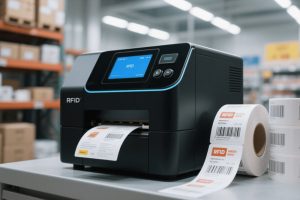
An in-depth look at the RFID printer market from 2025 to 2035, covering growth drivers, risks, regional trends, and real-world adoption across key industries.
More
Explore the global low-frequency RFID tag market from 2026 to 2036, including market size, growth outlook, technology and application segmentation, country-level CAGR analysis, and competitive landscape insights.
More
The RFID blood monitoring system market is projected to grow from USD 127.4 million in 2024 to USD 234.7 million by 2034, driven by traceability requirements, hospital digitization, and regulatory compliance in blood management.
More
The RFID signage system market is projected to grow rapidly from 2025 to 2035. This report analyzes market size, CAGR, key segments, regional trends, and drivers.
More